
Contents
Overview
Central Universities in India represent the pinnacle of the nation's public higher education landscape. The University Grants Commission (UGC) generally regulates all Indian universities. As of June 2023, there were 56 Central Universities, established by an Act of Parliament and overseen by the Ministry of Education's Department of Higher Education. These institutions are mandated to uphold rigorous academic standards and contribute significantly to research and national development. While the UGC generally regulates all Indian universities, Central Universities operate under the specific framework of the Central Universities Act, 2009, which delineates their governance, objectives, and operational mandates. Their establishment often signifies a commitment to specialized fields or regional development, making them crucial engines for intellectual and economic progress across India.
🎵 Origins & History
The concept of central universities in India evolved from institutions established during the British Raj, aiming to create centers of higher learning with national significance. Post-independence, the Indian government prioritized the expansion and consolidation of higher education, leading to the establishment of universities through parliamentary acts. The University Grants Commission (UGC), formed in 1956, became the primary regulatory body. A significant legislative milestone was the Central Universities Act, 2009, which not only consolidated the framework for existing central universities but also paved the way for the establishment of 12 new ones, underscoring a deliberate strategy to bolster higher education infrastructure. This act clarified the objectives, powers, and governance structures, ensuring a uniform standard across these prestigious institutions.
⚙️ How They Function
Central Universities function as autonomous bodies, empowered by their respective Acts of Parliament. While they operate under the broad umbrella of the UGC and the Ministry of Education, each university possesses its own statutes and ordinances governing academic and administrative affairs. Their core mandate includes providing instruction and research facilities in various disciplines, promoting interdisciplinary studies, and fostering innovation. Funding primarily comes from the central government, allowing them to invest in advanced research infrastructure, attract top faculty, and offer scholarships. The governance typically involves a Visitor (often the President of India), a Court, an Executive Council, and an Academic Council, ensuring a multi-tiered oversight mechanism.
📊 Key Facts & Numbers
As of June 2023, India boasts 56 Central Universities, a number that has steadily grown since the inception of the concept. These institutions collectively enroll millions of students annually, contributing significantly to India's Gross Enrollment Ratio (GER) in higher education. The budget allocation for these universities, while varying, represents a substantial investment by the central government, often running into thousands of crores of rupees annually for major institutions. For instance, the total expenditure on higher education in India, including central universities, is a significant portion of the national budget, reflecting its priority. Many Central Universities feature in global university rankings such as the QS World University Rankings and Times Higher Education World University Rankings.
👥 Key Institutions & Governance
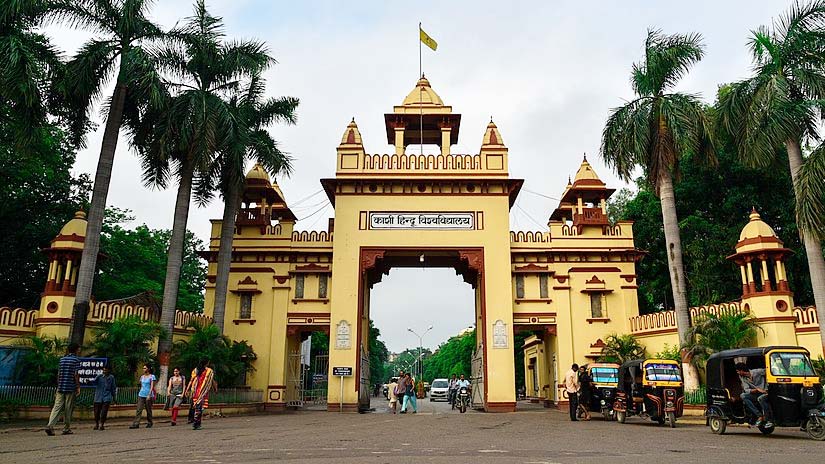
The governance of Central Universities is a layered structure designed for academic and administrative autonomy within a national framework. The Visitor for most central universities is the President of India, holding significant powers. The UGC, under the Ministry of Education, plays a crucial role in coordination, funding, and maintaining standards. Key institutions include the University Grants Commission (UGC) and the Ministry of Education itself. Each university has its own governing bodies, such as the Executive Council and Academic Council, comprising faculty, administrators, and sometimes external experts, ensuring a balance between academic freedom and institutional accountability. Notable examples include University of Delhi, Banaras Hindu University, and Aligarh Muslim University, each with unique historical trajectories and administrative structures.
🌍 Cultural Impact & Influence
Central Universities are not merely educational hubs; they are cultural anchors and drivers of social mobility. They have historically played a pivotal role in shaping national discourse, fostering intellectual movements, and producing leaders across politics, science, arts, and business. Institutions like Jawaharlal Nehru University (JNU) have become synonymous with critical thinking and social activism, while others like IIT Bombay (though an institute of national importance, shares characteristics) are at the forefront of technological innovation. The alumni networks of these universities are vast and influential, extending across India and the globe, impacting policy, industry, and academia. They serve as melting pots of diverse cultures and ideas, contributing to India's pluralistic identity.
⚡ Current State & Latest Developments
The current landscape of Central Universities is marked by continuous efforts towards modernization and global competitiveness. Many are actively engaged in international collaborations, joint research projects, and student exchange programs with institutions like Harvard University and University of Oxford. There's a growing emphasis on interdisciplinary research, particularly in areas like artificial intelligence, climate change, and biotechnology. The implementation of the National Education Policy 2020 is also significantly reshaping curricula, promoting flexibility, and encouraging a more holistic approach to education. Recent developments include increased funding for research infrastructure and a push towards digital learning platforms, accelerated by the COVID-19 pandemic.
🤔 Controversies & Debates
Central Universities are not without their share of controversies and debates. Funding disparities between institutions, political interference in appointments, and debates over academic freedom, particularly at universities like JNU, have been recurring issues. The perceived disconnect between academic output and industry needs is another point of contention, with critics arguing that some universities are too insular. Furthermore, debates surrounding reservation policies and access for marginalized communities, while intended to promote equity, sometimes lead to social and administrative friction. The autonomy granted to these institutions is often tested by government oversight and policy directives, creating a dynamic tension between independence and accountability.
🔮 Future Outlook & Predictions
The future outlook for Central Universities appears robust, driven by the national imperative to enhance higher education quality and research output. The National Education Policy 2020 aims to transform them into multidisciplinary institutions with flexible learning pathways. Expect a greater focus on research commercialization, startup incubation, and industry partnerships, potentially modeled after successful I-Corps programs in the US. There's also a push towards greater internationalization, attracting more foreign students and faculty. The challenge will be to balance this expansion with equitable access and to ensure that these institutions remain bastions of critical thought and innovation, rather than succumbing to bureaucratic pressures or narrow ideological agendas. The next decade could see a significant restructuring of governance and funding models.
💡 Practical Applications
Central Universities serve as crucial incubators for talent and innovation that directly benefit various sectors. Their graduates fill critical roles in government, public administration, research institutions like the ISRO, and the burgeoning private sector. The research conducted within their labs often leads to patents, new technologies, and policy recommendations that shape national development. For instance, research in agriculture at IARI (a deemed university, but indicative of the sector) impacts food security, while advancements in engineering at IIT Delhi drive industrial growth. They also act as centers for cultural preservation and dissemination, hosting festivals, academic conferences, and public lectures that enrich society.
Key Facts
- Category
- education
- Type
- topic