
Contents
- 🎯 What This Entry Covers
- 📈 The Engine of Desire: Why We Buy
- 🛒 Decoding Purchase Triggers
- 💸 The Psychology of Price & Value
- 📱 Digital Footprints & Data Trails
- 🌍 Global Trends & Local Flavors
- 🤔 The Skeptic's Corner: Are We Really in Control?
- 💡 Practical Takeaways for Savvy Consumers
- Frequently Asked Questions
- Related Topics
Overview
This entry is your practical guide to understanding the forces that shape what we buy and why. We're not just talking about impulse buys; we're dissecting the deep-seated psychological, social, and economic drivers behind every transaction. Whether you're a marketer trying to understand your audience, a consumer aiming for more intentional purchasing, or just someone curious about the mechanics of modern commerce, this is where you'll find the actionable insights. We cut through the jargon to show you the real-world impact of behavioral economics and sociological theory on your wallet and your life. Expect a no-nonsense breakdown of the 'how' and 'why' behind consumer behavior.
📈 The Engine of Desire: Why We Buy
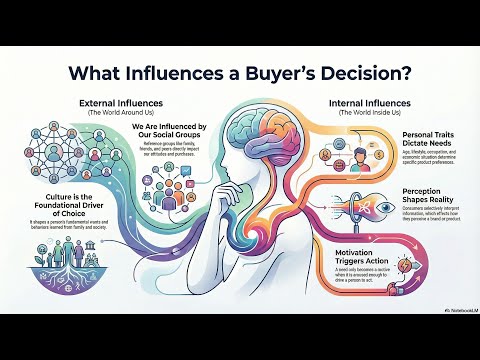
At its heart, consumption is driven by a complex interplay of needs, wants, and perceived value. Maslow's Hierarchy of Needs provides a foundational framework, but modern consumption extends far beyond basic survival. We buy to signal identity, to achieve social status, and to experience pleasure. The rise of influencer marketing and aspirational lifestyles on platforms like Instagram and TikTok has amplified the 'want' factor, often blurring the lines between genuine need and manufactured desire. Understanding this engine of desire is key to grasping why certain products achieve cult status while others languish.
🛒 Decoding Purchase Triggers
Purchase triggers are the subtle (and not-so-subtle) nudges that push us from consideration to conversion. These can range from scarcity tactics ('limited edition!') and social proof ('bestseller!') to emotional appeals and personalized recommendations based on our browsing history. The concept of choice architecture is crucial here; how options are presented can significantly influence our decisions, often without us realizing it. Think about the default settings on a subscription service or the placement of impulse items at a checkout counter – these are deliberate design choices aimed at guiding your behavior.
💸 The Psychology of Price & Value
Price is rarely just a number; it's a powerful psychological cue. We often use price as a proxy for quality, with higher prices sometimes signaling greater desirability or exclusivity. Loss aversion plays a significant role, making us more sensitive to potential losses (like missing a sale) than to equivalent gains. Furthermore, the way prices are framed – using techniques like charm pricing (e.g., $9.99 instead of $10.00) or bundling – can dramatically alter our perception of value. Understanding these pricing strategies is essential for making rational purchasing decisions.
📱 Digital Footprints & Data Trails
In the digital age, our consumption patterns are meticulously tracked, creating a rich data trail. Every click, search, and purchase contributes to a profile that advertisers use to target us with uncanny precision. Algorithmic recommendations on platforms like Netflix and Amazon are designed to keep us engaged and consuming by predicting our preferences. This raises critical questions about privacy and manipulation, as our online behavior is constantly analyzed to influence our offline purchasing decisions. The data generated is a goldmine for understanding emergent consumer trends.
🌍 Global Trends & Local Flavors
While global brands often project a unified image, consumption patterns are deeply influenced by local culture, economic conditions, and social norms. What's considered a necessity in one region might be a luxury in another. The rise of the gig economy and the sharing economy (think Uber, Airbnb) has also introduced new models of consumption, emphasizing access over ownership. Examining these variations reveals how deeply intertwined our buying habits are with the specific socioeconomic context in which we live.
🤔 The Skeptic's Corner: Are We Really in Control?
The notion that we are entirely rational actors making deliberate choices is a convenient fiction. Cognitive biases, such as confirmation bias (seeking information that confirms our existing beliefs) and the bandwagon effect (adopting behaviors because others are doing so), significantly influence our purchasing decisions. Marketers are adept at exploiting these biases, creating environments where impulse and emotion often override logic. The sheer volume of choices available in modern markets can also lead to decision fatigue, making us more likely to default to familiar or easily accessible options.
💡 Practical Takeaways for Savvy Consumers
To navigate the complex world of consumption, start by cultivating awareness. Before buying, ask yourself: Is this a need or a want? Am I being influenced by external pressure or genuine desire? Compare prices across different platforms and consider the long-term value, not just the immediate cost. Be mindful of how websites and apps are designed to capture your attention and influence your choices. Developing a personal consumer philosophy can help you make more intentional and satisfying purchasing decisions, aligning your spending with your values and goals.
Key Facts
- Year
- Ongoing
- Origin
- Anthropology, Economics, Psychology
- Category
- Behavioral Economics & Sociology
- Type
- Concept
Frequently Asked Questions
How do social media platforms influence what I buy?
Social media platforms leverage influencer marketing, aspirational content, and targeted advertising to shape your desires. Seeing peers or admired figures use certain products creates social proof and a sense of belonging, driving purchases. Algorithms also personalize feeds to show you products you're likely to buy, creating a constant stream of potential purchases. This environment is designed to tap into psychological triggers like FOMO (fear of missing out) and the desire for social validation.
What is 'choice architecture' and how does it affect me?
Choice architecture refers to the way options are presented to consumers, influencing their decisions without restricting their freedom of choice. Examples include default settings, the order in which items are displayed, and the framing of prices. For instance, a default subscription plan might be the most expensive, encouraging users to either accept it or actively choose a cheaper option, often leading to higher overall spending. Understanding this helps you recognize when your choices are being subtly guided.
How can I avoid impulse buying?
To curb impulse buying, implement a 'cooling-off' period for non-essential purchases, especially those over a certain amount. Create a shopping list before entering a store or browsing online and stick to it. Unsubscribe from marketing emails that trigger desire and avoid browsing shopping sites when you're feeling bored or stressed. Practicing mindful consumption involves questioning the true necessity and long-term value of an item before committing.
Is price always an indicator of quality?
Not necessarily. While price can sometimes correlate with quality, it's often used as a marketing tool to signal perceived value or exclusivity. Brands may charge a premium for branding, marketing, or perceived status rather than superior product attributes. It's crucial to research product reviews, compare specifications, and consider your actual needs rather than relying solely on the price tag to gauge quality. Sometimes, less expensive alternatives offer comparable or even better performance.
How does my digital footprint impact my consumption?
Your digital footprint—the data generated from your online activities—is used to create detailed consumer profiles. Advertisers and platforms use this data to deliver highly personalized ads and recommendations, influencing what you see and, consequently, what you consider buying. This can lead to a feedback loop where your online behavior reinforces certain purchasing habits, sometimes without you fully realizing the extent of the targeting. It's a key mechanism in modern digital marketing strategies.
What are some common cognitive biases that affect buying decisions?
Several cognitive biases influence our purchasing. Anchoring bias makes us overly reliant on the first piece of information offered (like an initial price). The bandwagon effect drives us to buy things because many others are doing so. Confirmation bias leads us to seek out information that supports a purchase we already want to make. Loss aversion makes us fear missing out on deals more than we value saving money. Recognizing these biases is the first step to mitigating their impact.