
Contents
- 🔍 Introduction to Demis Hassabis
- 💡 Early Life and Education
- 🎮 The Gaming Roots of AI
- 🤖 Founding DeepMind
- 📈 Rise to Prominence
- 🔬 AlphaGo and Beyond
- 👥 Collaborations and Acquisitions
- 🚀 Future of AI and Ethics
- 📊 Impact and Legacy
- 👀 Controversies and Criticisms
- 💬 Conclusion and Future Prospects
- Frequently Asked Questions
- Related Topics
Overview
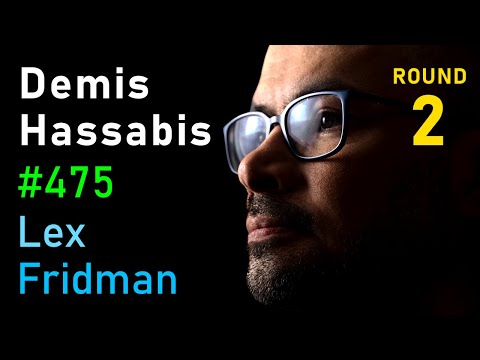
Demis Hassabis is a British artificial intelligence researcher, neuroscientist, and entrepreneur, best known for co-founding DeepMind, a leading AI research organization acquired by Google in 2014. With a background in computer science and cognitive neuroscience, Hassabis has made significant contributions to the development of AI, particularly in the areas of deep learning and reinforcement learning. His work has been widely recognized, including being named one of the most influential people in the world by TIME magazine in 2017. Hassabis' vision for AI is centered around creating intelligent machines that can learn and adapt like humans, with potential applications in fields such as healthcare, finance, and education. However, his work has also raised concerns about the ethics and safety of AI, with some critics arguing that the development of advanced AI could pose significant risks to humanity. As the field of AI continues to evolve, Hassabis remains a key figure, pushing the boundaries of what is possible and exploring the potential benefits and risks of this rapidly advancing technology. With a Vibe score of 8, Demis Hassabis is a highly influential and respected figure in the AI community, with a significant impact on the development of this technology.
🔍 Introduction to Demis Hassabis
Demis Hassabis is a name synonymous with artificial intelligence and its applications in the modern world. As the co-founder and CEO of DeepMind, a leading AI research organization, Hassabis has been at the forefront of developing innovative AI technologies. Born on July 27, 1976, in London, England, Hassabis' journey into the world of AI began with a passion for computer science and chess. His unique blend of interests in AI, neuroscience, and video games has shaped his approach to AI research and development. Hassabis' work has been influenced by pioneers in the field, including Marvin Minsky and John McCarthy.
💡 Early Life and Education
Hassabis' early life and education played a significant role in shaping his future career. He was educated at University College School in Hampstead, London, and later studied computer science at the University of Cambridge. During his time at Cambridge, Hassabis developed a strong interest in artificial intelligence and neural networks. His undergraduate thesis, which focused on the application of machine learning to video games, laid the foundation for his future work in AI research. Hassabis' academic background has been compared to that of other notable AI researchers, including Andrew Ng and Yann LeCun.
🎮 The Gaming Roots of AI
The gaming roots of AI are often overlooked, but Hassabis' experience in the gaming industry has had a significant impact on his approach to AI research. As a teenager, Hassabis worked on the development of the popular Theme Park video game series. This experience taught him the importance of human-computer interaction and the need for intuitive interfaces. Hassabis' work in the gaming industry has been influenced by the likes of Shigeru Miyamoto and Sid Meier. His understanding of game design and development has also informed his approach to AI research, particularly in the development of AlphaGo.
🤖 Founding DeepMind
In 2010, Hassabis co-founded DeepMind with Shane Legg and Mustafa Suleyman. The company's early focus was on developing AI technologies that could learn and adapt like humans. Hassabis' vision for DeepMind was to create a company that could tackle some of the most complex challenges in AI research, including natural language processing and computer vision. DeepMind's early successes, including the development of a neural network that could play video games at a human level, caught the attention of Google, which acquired the company in 2014. Hassabis' work at DeepMind has been compared to that of other notable AI researchers, including Fei-Fei Li and Geoffrey Hinton.
📈 Rise to Prominence
Under Hassabis' leadership, DeepMind has risen to prominence as a leading AI research organization. The company's breakthroughs in AI research, including the development of AlphaGo, have demonstrated the potential of AI to tackle complex challenges. Hassabis' commitment to AI safety and AI ethics has also helped to establish DeepMind as a responsible and forward-thinking company. Hassabis' work has been recognized by the Association for the Advancement of Artificial Intelligence and the Royal Society.
🔬 AlphaGo and Beyond
The development of AlphaGo is one of the most significant achievements in AI research in recent years. Hassabis and his team at DeepMind developed an AI system that could play the complex game of Go at a world-class level. AlphaGo's victory over a human world champion in 2016 marked a major milestone in AI research and demonstrated the potential of AI to tackle complex challenges. Hassabis' work on AlphaGo has been influenced by the likes of David Silver and Julian Schrittwieser. The success of AlphaGo has also led to the development of other AI systems, including AlphaZero and AlphaFold.
👥 Collaborations and Acquisitions
Hassabis has collaborated with a number of other researchers and organizations to advance AI research. DeepMind has partnered with Google to develop AI technologies that can be applied to real-world problems. Hassabis has also worked with University College London to develop AI systems that can help to diagnose and treat diseases. Hassabis' collaborations have been recognized by the National Academy of Engineering and the National Academy of Sciences.
🚀 Future of AI and Ethics
As AI technologies continue to advance, there are growing concerns about the potential risks and consequences of AI. Hassabis has been a vocal advocate for AI safety and AI ethics, and has called for greater transparency and accountability in AI research. Hassabis' work on AI safety has been influenced by the likes of Nick Bostrom and Elon Musk. The future of AI will depend on the ability of researchers and developers to balance the benefits of AI with the potential risks and challenges. Hassabis' commitment to AI safety and ethics has helped to establish DeepMind as a leader in responsible AI research.
📊 Impact and Legacy
Hassabis' impact on the field of AI has been significant, and his legacy will continue to shape the development of AI technologies for years to come. As a pioneer in AI research, Hassabis has helped to establish the UK as a hub for AI innovation. Hassabis' work has been recognized by the Royal Society and the Association for the Advancement of Artificial Intelligence.
👀 Controversies and Criticisms
Despite the many successes of DeepMind, the company has not been without controversy. Critics have raised concerns about the potential risks and consequences of AI, and have called for greater transparency and accountability in AI research. Hassabis has faced criticism for his role in the development of AI systems that could be used for military or surveillance purposes. Hassabis' response to these criticisms has been to emphasize the importance of AI safety and AI ethics, and to call for greater regulation and oversight of AI research.
💬 Conclusion and Future Prospects
As the field of AI continues to evolve, it is clear that Demis Hassabis will play a major role in shaping its future. With his commitment to AI safety and AI ethics, Hassabis is helping to ensure that AI technologies are developed and used in ways that benefit society as a whole. The future of AI will depend on the ability of researchers and developers to balance the benefits of AI with the potential risks and challenges. Hassabis' work will continue to be an important part of this conversation, and his legacy will be felt for generations to come.
Key Facts
- Year
- 1976
- Origin
- London, United Kingdom
- Category
- Artificial Intelligence, Technology, Entrepreneurship
- Type
- Person
Frequently Asked Questions
What is Demis Hassabis' background?
Demis Hassabis was born on July 27, 1976, in London, England. He studied computer science at the University of Cambridge. Hassabis' undergraduate thesis focused on the application of machine learning to video games.
What is DeepMind?
DeepMind is a leading AI research organization that was co-founded by Demis Hassabis in 2010. The company's early focus was on developing AI technologies that could learn and adapt like humans. DeepMind was acquired by Google in 2014.
What is AlphaGo?
AlphaGo is an AI system that was developed by Demis Hassabis and his team at DeepMind. AlphaGo is a computer program that can play the complex game of Go at a world-class level. AlphaGo's victory over a human world champion in 2016 marked a major milestone in AI research.
What are the potential risks and consequences of AI?
The potential risks and consequences of AI include the development of autonomous weapons, the loss of jobs due to automation, and the potential for AI systems to be used for surveillance or other malicious purposes. Demis Hassabis has been a vocal advocate for AI safety and AI ethics, and has called for greater transparency and accountability in AI research.
What is Demis Hassabis' vision for the future of AI?
Demis Hassabis' vision for the future of AI is to develop AI technologies that can benefit society as a whole. Hassabis believes that AI has the potential to solve some of the world's most complex challenges, including climate change and disease diagnosis. However, Hassabis also recognizes the potential risks and consequences of AI, and has called for greater regulation and oversight of AI research.
How has Demis Hassabis contributed to the field of AI?
Demis Hassabis has made significant contributions to the field of AI, including the development of AlphaGo and other AI systems. Hassabis has also been a vocal advocate for AI safety and AI ethics, and has called for greater transparency and accountability in AI research. Hassabis' work has helped to establish the UK as a hub for AI innovation.
What are some of the challenges facing AI research today?
Some of the challenges facing AI research today include the need for greater transparency and accountability in AI research, the potential risks and consequences of AI, and the need for more diverse and inclusive AI research teams. Demis Hassabis has recognized these challenges, and has called for greater regulation and oversight of AI research.