
Contents
- 🎵 Origins & History
- ⚙️ How It Works: The Bodhisattva Path
- 📊 Key Facts & Numbers
- 👥 Key Figures & Schools
- 🌍 Cultural Impact & Influence
- ⚡ Current State & Latest Developments
- 🤔 Controversies & Debates
- 🔮 Future Outlook & Predictions
- 💡 Practical Applications: Meditation & Ethics
- 📚 Related Topics & Deeper Reading
- References
Overview
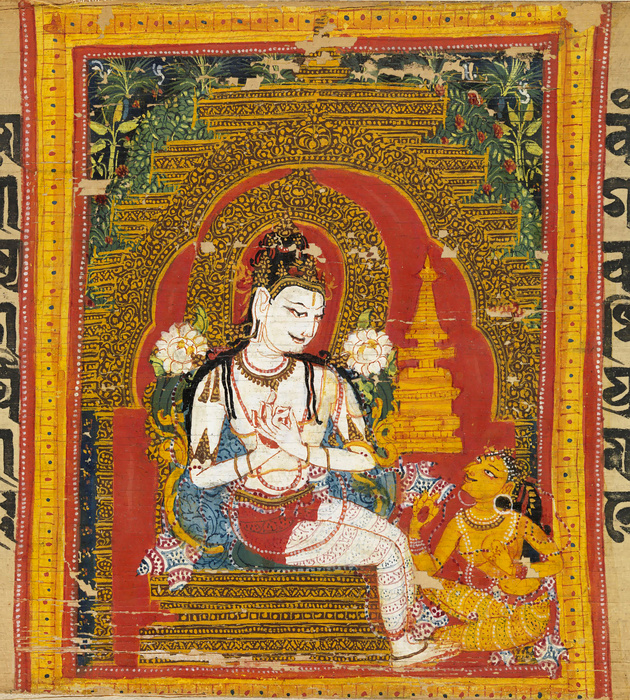
Mahayana Buddhism emerged in India, evolving from earlier Buddhist traditions. While Theravada Buddhism preserved the Pali Canon as its primary scripture, Mahayana developed its own extensive canon, including the Prajnaparamita Sutras, Lotus Sutra, and Vimalakirti Sutra, which introduced new philosophical concepts. Early Mahayana centers flourished in regions like Amaravati, and its ideas spread along trade routes. Key developments included the conceptualization of the bodhisattva ideal and the understanding of emptiness (sunyata) as a fundamental reality. This period saw a significant divergence in doctrine and practice, laying the groundwork for distinct schools that would later dominate East Asian Buddhism.
⚙️ How It Works: The Bodhisattva Path
At its core, Mahayana Buddhism centers on the bodhisattva path, a profound commitment to achieving full Buddhahood not for oneself alone, but for the liberation of all sentient beings. This path is characterized by the cultivation of the Six Perfections (paramitas): generosity, ethics, patience, effort, meditation, and wisdom. Unlike the Arhat ideal, which seeks individual liberation from suffering, the bodhisattva strives to postpone their own final nirvana until all beings are free. This altruistic motivation is fueled by the understanding of 'emptiness' (sunyata), the idea that all phenomena lack inherent, independent existence, leading to compassion (karuna) for all beings trapped in illusion. The ultimate goal is to become a fully enlightened Buddha, capable of guiding countless beings towards awakening.
📊 Key Facts & Numbers
Mahayana Buddhism is the largest branch of Buddhism globally. The tradition is particularly dominant in East Asian countries like China, Japan, Korea, and Vietnam, as well as in Tibet and parts of Southeast Asia. The Mahayana canon comprises thousands of sutras, far exceeding the number of texts accepted by Theravada Buddhism. The development of Vajrayana (Tibetan Buddhism) introduced tantric practices, which are considered a subset of Mahayana. The global Buddhist market, encompassing religious goods, retreats, and publications, is estimated to be worth billions of dollars annually.
👥 Key Figures & Schools
Key figures in Mahayana Buddhism include Nagarjuna, the philosopher credited with systematizing the Madhyamaka school and the concept of emptiness. Asanga and Vasubandhu were pivotal in establishing the Yogacara school, emphasizing the mind-only nature of reality. In East Asia, figures like Bodhidharma, traditionally credited with bringing Chan (Zen) Buddhism to China, and Hui Neng, a patriarch of Chan Buddhism, are highly revered. Major schools within Mahayana include Zen (Chan), Pure Land, Tibetan Buddhism (which includes Vajrayana), and Nichiren Buddhism. These schools, while sharing core Mahayana tenets, developed distinct practices and philosophical interpretations over centuries.
🌍 Cultural Impact & Influence
Mahayana Buddhism has profoundly shaped the cultural, artistic, and philosophical landscapes of East Asia and Tibet. Its emphasis on compassion and enlightenment inspired vast artistic traditions, including intricate Buddhist sculptures, vibrant mandalas, and monumental temple architecture found in places like Kyoto, Bagan, and Lhasa. Philosophical concepts from Mahayana, particularly emptiness and interdependence, have influenced secular thought and literature. The development of calligraphy and ink wash painting in China and Japan often drew inspiration from Buddhist aesthetics and meditative practices. Furthermore, Mahayana ethics have informed social structures and values, promoting non-violence and community welfare across numerous societies.
⚡ Current State & Latest Developments
In the contemporary era, Mahayana Buddhism continues to evolve, adapting to globalized contexts and engaging with modern challenges. The rise of mindfulness practices, largely derived from Buddhist meditation techniques, has seen widespread adoption in secular settings, particularly in the West. Online Dharma centers and virtual meditation groups, facilitated by platforms like Zoom and YouTube.com, have made teachings accessible to a global audience, especially during the COVID-19 pandemic. There's also a growing interest in interfaith dialogue and Buddhist engagement with scientific inquiry, particularly concerning consciousness and cosmology, as seen in initiatives like the Mind and Life Institute.
🤔 Controversies & Debates
Mahayana Buddhism is not without its controversies and debates. One significant point of contention is the historical authenticity and philosophical validity of the Mahayana Sutras, with some scholars and practitioners of other Buddhist traditions questioning their status as original teachings of the Buddha. The concept of 'emptiness' (sunyata) itself has been subject to diverse interpretations, with some critics arguing it can lead to nihilism if misunderstood. Furthermore, the role of deities and elaborate rituals in some Mahayana traditions, particularly in Vajrayana, has drawn criticism from those seeking a more austere, philosophical approach. Debates also arise regarding the commercialization of Buddhism and the potential dilution of its core teachings in secularized mindfulness movements.
🔮 Future Outlook & Predictions
The future of Mahayana Buddhism appears dynamic, marked by continued adaptation and global expansion. As Western interest in Buddhist philosophy and meditation grows, new forms of practice and interpretation are likely to emerge, potentially blending Mahayana insights with local cultural contexts. The increasing accessibility of teachings through digital platforms suggests a more decentralized and interconnected global sangha. Challenges remain, including preserving traditional lineages amidst modernization, addressing the impact of climate change on monastic communities, and navigating the complex relationship between religious practice and scientific understanding. The Mahayana ideal of universal liberation may offer a potent framework for addressing global crises, provided its core principles of compassion and wisdom are effectively communicated.
💡 Practical Applications: Meditation & Ethics
Mahayana Buddhism offers a rich array of practical applications for daily life, primarily centered on ethical conduct and mental cultivation. Meditation, particularly Vipassanā (insight) and Samatha (calm abiding) practices, is central to developing mindfulness, concentration, and wisdom. The cultivation of compassion (karuna) and loving-kindness (metta) through practices like Tonglen meditation aims to reduce suffering and foster altruism. Ethical precepts, such as the Five Precepts (abstaining from killing, stealing, sexual misconduct, lying, and intoxicants), provide a framework for moral living. The bodhisattva ideal encourages selfless service and engagement with the world to alleviate suffering, influencing approaches to social justice and environmental activism among Buddhist practitioners.
Key Facts
- Category
- philosophy
- Type
- topic