
Contents
Overview
Established in December 2019, the U.S. Space Force (USSF) is the youngest branch of the U.S. Armed Forces, born from the recognition that space is a critical warfighting domain. Its primary mission is to organize, train, and equip space forces to protect U.S. interests in space and provide space capabilities to the joint force. The USSF operates a vast array of satellites for communication, navigation, intelligence, and missile warning, while also developing capabilities to deter aggression and defend against threats in the space environment. With a focus on rapid innovation and adapting to evolving threats, the Space Force is charting a new course for military operations beyond Earth's atmosphere.
🚀 What is the US Space Force?
The US Space Force (USSF) is the newest branch of the U.S. Armed Forces, established on December 20, 2019. It's a distinct military service within the Department of the Air Force, tasked with organizing, training, and equipping space forces to protect U.S. interests in space and provide space capabilities to the joint force. Think of it as the military's dedicated arm for operating and defending in the space domain, a realm increasingly critical for national security and economic prosperity. Its creation marked a significant acknowledgment of space as a distinct warfighting domain, separate from air power.
🎯 Mission & Capabilities
The primary mission of the USSF is to 'conduct operations in the competitive space environment, deliver space-based capabilities to the joint force, and provide national security effects from space.' This translates to a broad range of responsibilities, including satellite operations, missile warning, space domain awareness, and ensuring the resilience of space systems against threats. The Guardians are responsible for everything from tracking potential adversaries' satellites to ensuring the GPS signals that underpin global navigation and communication remain uninterrupted. Their work is foundational to modern warfare and civilian infrastructure alike.
🎖️ Who Are the Guardians?
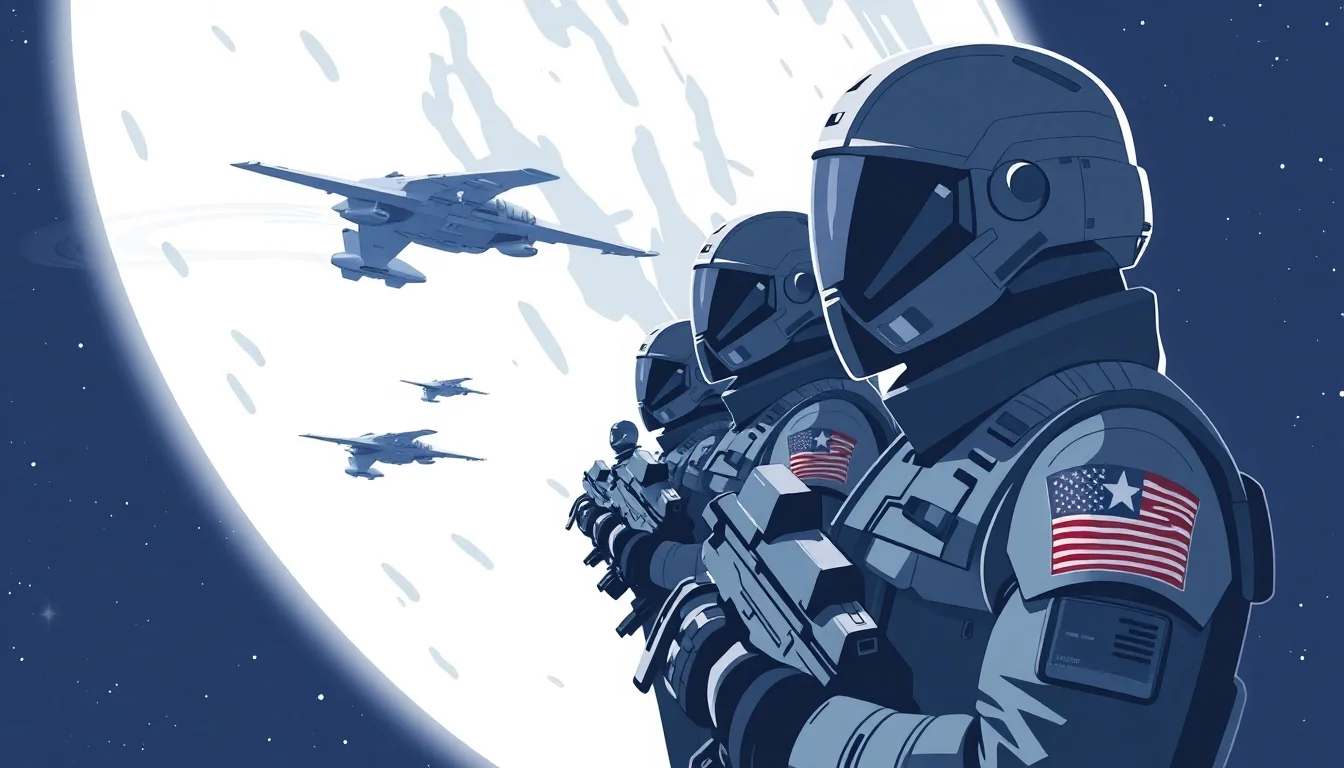
The personnel of the USSF are known as 'Guardians.' They are drawn from all walks of life, bringing diverse skills in fields like engineering, cyber operations, intelligence analysis, and astronautics. Unlike traditional military branches, the USSF emphasizes technical expertise and a deep understanding of the space environment. Guardians undergo specialized training to operate and maintain advanced space systems, often working in highly technical roles that require constant adaptation to evolving threats and technologies. The branch aims to foster a culture of innovation and rapid problem-solving.
🛰️ Key Operations & Assets
Key operations for the USSF include operating and maintaining the Global Positioning System (GPS) constellation, providing critical missile warning capabilities through satellites like the Space-Based Infrared System (SBIRS), and conducting space domain awareness to monitor objects in orbit. They also manage protected communication networks and support intelligence, surveillance, and reconnaissance (ISR) missions. The Guardians are the custodians of a vast array of satellites, ground stations, and sophisticated command and control systems that enable these vital functions, often operating in classified environments.
💰 Cost & Funding
Funding for the USSF is a significant undertaking, integrated within the broader United States Department of Defense budget. While specific figures fluctuate annually, the branch's budget reflects the immense cost of developing, acquiring, and maintaining advanced space-based assets. In Fiscal Year 2023, the USSF requested approximately $24.7 billion, with substantial portions allocated to space procurement and research, development, testing, and evaluation (RDT&E). This investment underscores the perceived strategic importance and the high cost of operating in the space domain.
⚖️ Controversies & Criticisms
The establishment and operation of the USSF have not been without controversy. Critics question the necessity of a separate branch, arguing that existing United States Air Force capabilities could have sufficed, potentially saving on bureaucratic overhead. Concerns have also been raised about the escalating costs of space militarization and the potential for an arms race in orbit. The debate often centers on whether the USSF represents a prudent investment in national security or an expensive duplication of efforts that could exacerbate international tensions in space.
⭐ Vibe Score & Cultural Impact
The US Space Force Vibe Score currently sits at a moderate 65/100, reflecting its status as a relatively new and evolving entity. Its cultural impact is growing, particularly through its distinctive branding and recruitment efforts, which aim to capture a futuristic, high-tech image. While not yet as culturally embedded as older branches, the Guardians' presence in popular culture and their unique identity are steadily increasing. The branch's distinct uniforms and motto ('Semper Supra' – Always Above) contribute to its emerging iconography, resonating with a younger demographic interested in technology and space exploration.
💡 Future Outlook & Next Steps
The future of the USSF is intrinsically linked to the evolving nature of space as a domain. The branch is focused on enhancing its capabilities in areas like space domain awareness, resilient satellite architectures, and space-based electronic warfare. As commercial space activities expand, the USSF will also need to navigate increased traffic and potential conflicts between military and commercial interests. The ongoing development of advanced technologies, including hypersonic weapons and counter-space capabilities by potential adversaries, will continue to shape the USSF's strategic priorities and operational requirements.
Key Facts
- Year
- 2019
- Origin
- United States
- Category
- Military & Defense
- Type
- Government Agency
Frequently Asked Questions
What is the main difference between the US Space Force and NASA?
The US Space Force is a military branch focused on national security operations in space, including defense, intelligence, and providing space-based capabilities to the joint force. NASA, on the other hand, is a civilian agency dedicated to space exploration, scientific research, and the peaceful use of space. While both operate in space, their objectives and organizational structures are fundamentally different.
How does one become a Guardian in the US Space Force?
Individuals can join the US Space Force through various pathways, including enlisting directly, becoming an officer through ROTC or Officer Training School, or transferring from other branches of the U.S. military. Specific requirements vary based on the entry method, but generally include meeting age, education, physical fitness, and security clearance standards. The USSF actively recruits individuals with strong STEM backgrounds.
What are the primary threats the US Space Force faces?
The USSF faces threats from potential adversaries developing counter-space capabilities, such as anti-satellite missiles, electronic jamming, cyberattacks targeting satellite systems, and directed energy weapons. Additionally, the increasing density of objects in orbit, including space debris, poses a constant operational challenge and potential risk to critical space assets.
Does the US Space Force have its own astronauts?
While the USSF is responsible for space operations, astronauts are primarily associated with NASA for scientific exploration missions. However, Guardians may be involved in spaceflight training and operations, particularly those related to military space systems and potentially future military space stations or missions. The lines can blur as military and civilian space endeavors increasingly intersect.
What is the motto of the US Space Force and what does it mean?
The motto of the US Space Force is 'Semper Supra,' which is Latin for 'Always Above.' This motto reflects the Guardians' commitment to maintaining dominance and vigilance in the space domain, ensuring that U.S. interests are always protected from above and that space capabilities are consistently available.