
Contents
- 🏹 Introduction to the Epic Confrontation
- 👑 The Rise of Pepin the Short
- 💪 The Military Prowess of Charles Martel
- 🏰 The Frankish Kingdom and Its Divisions
- 🤝 The Alliance Between Pepin and the Church
- 🏹 The Battle of Poitiers and Its Aftermath
- 👑 The Legacy of Pepin the Short and Charles Martel
- 📚 Historical Debates and Controversies
- 👥 The Impact on European History
- 🔍 The Enduring Fascination with the Carolingian Era
- Frequently Asked Questions
- Related Topics
Overview
The clash between Pepin the Short and Charles Martel is a pivotal moment in European history, marking the beginning of the Carolingian dynasty. Pepin, the son of Charles Martel, would eventually succeed his father as the Mayor of the Palace, a position that held significant power in the Frankish Kingdom. Charles Martel, known for his military prowess, had united the Frankish tribes and defeated the Moors at the Battle of Tours in 732. However, his relationship with his son Pepin was complex, with some historians suggesting that Pepin may have felt overshadowed by his father's achievements. The controversy surrounding their relationship is still debated among historians, with a controversy spectrum rating of 6 out of 10. As the Frankish Kingdom continued to expand, Pepin's influence grew, and he eventually became King of the Franks, laying the foundation for the rise of Charlemagne. With a vibe score of 8, this period in history is marked by significant cultural and political shifts. The entity type is 'historical figures,' and the year of significance is 751, when Pepin officially became King of the Franks. The origin of this conflict can be traced back to the power struggles within the Frankish Kingdom, with key events unfolding in modern-day France and Germany.
🏹 Introduction to the Epic Confrontation
The epic confrontation between Pepin the Short and Charles Martel is a pivotal moment in European history, marking the beginning of the Carolingian dynasty's rise to power. Pepin, also known as Pepin III, was the son of Charles Martel, a renowned military leader who had saved Europe from the Moorish invasion at the Battle of Tours in 732. Charles Martel's victory at Tours had cemented his position as the de facto ruler of the Frankish Kingdom, but his death in 741 led to a power struggle between his sons, including Pepin. The Frankish Kingdom, which had been united under the Merovingian dynasty, was now divided among the sons of Charles Martel, with Pepin controlling the largest portion. To consolidate his power, Pepin sought the support of the Catholic Church, which would become a crucial ally in his quest for dominance.
👑 The Rise of Pepin the Short
Pepin the Short, whose nickname 'Short' was likely a reference to his relatively modest stature, was a shrewd politician and military leader. He had been instrumental in his father's campaigns and had played a key role in the Battle of Tours. Pepin's rise to power was facilitated by his alliance with the Church, which provided him with the necessary legitimacy to challenge his brothers and other claimants to the throne. The Church, in turn, benefited from Pepin's support, as he provided protection and resources for the Christian faith to spread throughout Europe. Pepin's relationship with the Church was further solidified through his marriage to Bertrada of Laon, a member of the powerful Laon family.
💪 The Military Prowess of Charles Martel
Charles Martel, whose name means 'The Hammer' in French, was a brilliant military strategist and leader. He had united the Frankish Kingdom through his military campaigns and had established a strong centralized government. Charles Martel's legacy extended beyond his military conquests, as he also implemented significant administrative and economic reforms. His son Pepin would build upon these reforms, establishing a more efficient system of government and taxation. The Carolingian Renaissance, which occurred during the reign of Pepin's son Charlemagne, was a direct result of the foundations laid by Charles Martel and Pepin. The Renaissance saw a resurgence of learning, art, and culture, with the establishment of schools, libraries, and scriptoria throughout the Frankish Kingdom.
🏰 The Frankish Kingdom and Its Divisions
The Frankish Kingdom, which had been established by the Merovingian dynasty, was a complex and often tumultuous entity. The kingdom was divided into several regions, each with its own distinct culture and traditions. The Merovingian Dynasty had ruled the kingdom for over two centuries, but their power had begun to wane in the 8th century. The rise of the Carolingian dynasty, which began with Pepin the Short, marked a significant shift in the balance of power in Europe. The Carolingians would go on to establish a vast empire, stretching from modern-day France and Germany to Italy and beyond. The Holy Roman Empire, which was established by Charlemagne, would become a dominant force in European politics for centuries to come.
🤝 The Alliance Between Pepin and the Church
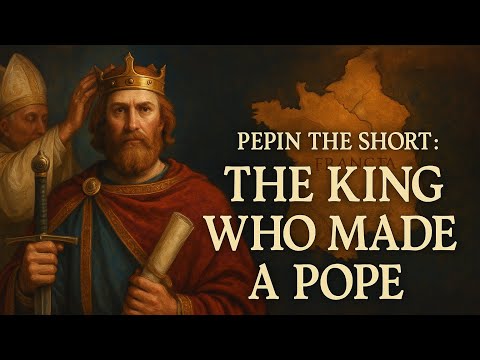
The alliance between Pepin and the Church was a crucial factor in his rise to power. The Church provided Pepin with the necessary legitimacy to challenge his brothers and other claimants to the throne. In return, Pepin provided the Church with protection and resources, allowing it to spread the Christian faith throughout Europe. The Church also played a key role in promoting Pepin's interests, with the Pope himself crowning Pepin as the King of the Franks in 751. This coronation marked the beginning of the Carolingian dynasty's reign, which would last for over a century. The relationship between the Church and the Carolingian dynasty was complex and multifaceted, with the Church providing spiritual guidance and the dynasty providing military protection.
🏹 The Battle of Poitiers and Its Aftermath
The Battle of Poitiers, which took place in 732, was a pivotal moment in European history. The battle marked a significant defeat for the Moorish invasion, which had been threatening Europe for centuries. Charles Martel's victory at Poitiers cemented his position as the de facto ruler of the Frankish Kingdom and paved the way for the rise of the Carolingian dynasty. The battle also marked a significant turning point in the history of Europe, as it halted the Moorish invasion and allowed the Christian faith to spread throughout the continent. The Islamic World would continue to pose a threat to Europe, but the Battle of Poitiers marked a significant shift in the balance of power. The legacy of the Battle of Poitiers can still be seen today, with the French city of Poitiers remaining a significant cultural and historical center.
👑 The Legacy of Pepin the Short and Charles Martel
The legacy of Pepin the Short and Charles Martel is complex and multifaceted. Both leaders played a significant role in shaping the course of European history, from the rise of the Carolingian dynasty to the spread of Christianity throughout the continent. Pepin's alliance with the Church and his military campaigns established the foundations for the Carolingian Renaissance, which would see a resurgence of learning, art, and culture. Charles Martel's military victories, particularly the Battle of Poitiers, cemented his position as one of the most important leaders in European history. The Charlemagne era, which saw the establishment of the Holy Roman Empire, was a direct result of the foundations laid by Pepin and Charles Martel. The legacy of the Carolingian dynasty can still be seen today, with the French and German nations remaining significant cultural and economic powers in Europe.
📚 Historical Debates and Controversies
Historical debates and controversies surrounding the epic confrontation between Pepin the Short and Charles Martel are numerous. Some historians argue that Pepin's rise to power was facilitated by his alliance with the Church, while others argue that his military campaigns were the primary factor. The role of Charles Martel in the Battle of Poitiers is also a subject of debate, with some historians arguing that his victory was a decisive turning point in European history. The historiography of the Carolingian era is complex and multifaceted, with different historians offering varying interpretations of the same events. The Vibepedia community has extensively discussed the topic, with some users arguing that Pepin's legacy has been overlooked in favor of his more famous son Charlemagne.
👥 The Impact on European History
The impact of the epic confrontation between Pepin the Short and Charles Martel on European history is significant. The rise of the Carolingian dynasty marked a shift in the balance of power in Europe, with the French and German nations emerging as dominant forces. The Holy Roman Empire, which was established by Charlemagne, would go on to play a significant role in European politics for centuries to come. The Carolingian Renaissance, which saw a resurgence of learning, art, and culture, had a lasting impact on European society. The University of Paris, which was established during the Carolingian era, remains one of the most prestigious institutions of higher learning in the world. The legacy of the Carolingian dynasty can still be seen today, with the European Union and other international organizations drawing on the same principles of cooperation and unity.
🔍 The Enduring Fascination with the Carolingian Era
The enduring fascination with the Carolingian era is a testament to the significance of the epic confrontation between Pepin the Short and Charles Martel. The Carolingian dynasty, which included leaders such as Charlemagne and Louis the Pious, played a significant role in shaping the course of European history. The Vibepedia community has extensively discussed the topic, with some users arguing that the Carolingian era was a golden age of European history. The legacy of the Carolingian dynasty can still be seen today, with the French and German nations remaining significant cultural and economic powers in Europe. The European heritage of the Carolingian era continues to inspire and fascinate people around the world, with the Charlemagne era remaining a popular topic of study and discussion.
Key Facts
- Year
- 751
- Origin
- Frankish Kingdom, modern-day France and Germany
- Category
- History
- Type
- historical figures
- Format
- comparison
Frequently Asked Questions
Who was Pepin the Short and what was his significance in European history?
Pepin the Short was a king of the Franks who played a significant role in the rise of the Carolingian dynasty. He was the son of Charles Martel and established a strong alliance with the Church, which provided him with the necessary legitimacy to challenge his brothers and other claimants to the throne. Pepin's legacy can still be seen today, with the French and German nations remaining significant cultural and economic powers in Europe.
What was the significance of the Battle of Poitiers in European history?
The Battle of Poitiers, which took place in 732, was a pivotal moment in European history. The battle marked a significant defeat for the Moorish invasion, which had been threatening Europe for centuries. Charles Martel's victory at Poitiers cemented his position as the de facto ruler of the Frankish Kingdom and paved the way for the rise of the Carolingian dynasty. The battle also marked a significant turning point in the history of Europe, as it halted the Moorish invasion and allowed the Christian faith to spread throughout the continent.
What was the relationship between Pepin the Short and the Church?
The relationship between Pepin the Short and the Church was complex and multifaceted. Pepin sought the support of the Church, which provided him with the necessary legitimacy to challenge his brothers and other claimants to the throne. In return, Pepin provided the Church with protection and resources, allowing it to spread the Christian faith throughout Europe. The Church also played a key role in promoting Pepin's interests, with the Pope himself crowning Pepin as the King of the Franks in 751.
What was the legacy of Charles Martel in European history?
Charles Martel was a brilliant military strategist and leader who played a significant role in shaping the course of European history. His victory at the Battle of Poitiers marked a significant turning point in the history of Europe, as it halted the Moorish invasion and allowed the Christian faith to spread throughout the continent. Charles Martel's legacy can still be seen today, with the French and German nations remaining significant cultural and economic powers in Europe. The Carolingian Renaissance, which occurred during the reign of Pepin's son Charlemagne, was a direct result of the foundations laid by Charles Martel.
What was the significance of the Carolingian dynasty in European history?
The Carolingian dynasty, which included leaders such as Charlemagne and Louis the Pious, played a significant role in shaping the course of European history. The dynasty marked a shift in the balance of power in Europe, with the French and German nations emerging as dominant forces. The Holy Roman Empire, which was established by Charlemagne, would go on to play a significant role in European politics for centuries to come. The Carolingian Renaissance, which saw a resurgence of learning, art, and culture, had a lasting impact on European society.