
Contents
- 🌎 Introduction to Sound Healing Studies
- 🎵 History of Sound Healing
- 🔬 The Science Behind Sound Healing
- 👥 Key Figures in Sound Healing
- 📊 Research and Studies on Sound Healing
- 🌈 Types of Sound Healing Therapies
- 🎶 Sound Healing and Music Therapy
- 🙏 Sound Healing and Meditation
- 👫 Sound Healing in Community Settings
- 📚 Future Directions in Sound Healing Studies
- 🔍 Controversies and Criticisms in Sound Healing
- 💡 Conclusion and Recommendations
- Frequently Asked Questions
- Related Topics
Overview
Sound healing studies, with a vibe rating of 8, have been gaining traction as a complementary therapy, with roots in ancient cultures and a growing body of modern research. The practice involves using sound waves to balance and restore the body's energy, with proponents claiming benefits for mental and physical well-being. However, skeptics question the lack of standardized protocols and limited understanding of the underlying mechanisms. Key figures like Dr. Mitchell Gaynor and Fabien Maman have contributed to the field, while organizations like the Sound Healing Academy and the International Society for the Study of Subtle Energies and Energy Medicine provide training and resources. As the field continues to evolve, it's likely to intersect with emerging technologies like brain-computer interfaces and personalized medicine, raising questions about the future of sound healing and its potential applications. With a controversy spectrum of 6, sound healing studies are poised to remain a topic of debate and inquiry, with influence flows tracing back to ancient Greek and Eastern spiritual traditions.
🌎 Introduction to Sound Healing Studies
Sound healing studies, also known as sound therapy or sound medicine, is an alternative medicine approach that utilizes sound waves to promote physical, emotional, and spiritual well-being. This field of study has gained significant attention in recent years, with many researchers and practitioners exploring its potential benefits. According to sound healing therapy experts, sound waves can be used to reduce stress, improve mood, and even alleviate symptoms of chronic diseases. For instance, vibroacoustic therapy has been used to treat conditions such as fibromyalgia and arthritis. The National Institute of Health has also funded studies on the effects of sound healing on mental health.
🎵 History of Sound Healing
The history of sound healing dates back to ancient civilizations, where sound was used in various forms of spiritual and healing practices. In ancient Greece, for example, Pythagoras used sound and music to heal the mind and body. Similarly, in ancient India, the use of mantras and chanting was believed to have healing properties. The modern concept of sound healing, however, is often attributed to the work of Hans Jenny, a Swiss physician who studied the effects of sound on the human body. Jenny's work laid the foundation for the development of cymatics, the study of the visual patterns that emerge when a surface is vibrated with sound waves.
🔬 The Science Behind Sound Healing
The science behind sound healing is complex and multifaceted. Research has shown that sound waves can affect the body's physiology in various ways, including altering brain wave activity, heart rate, and blood pressure. The use of binaural beats, for example, has been shown to induce a state of relaxation and reduce anxiety. The frequency and amplitude of sound waves can also be tailored to specific healing applications, such as pain management and inflammation reduction. For more information on the science behind sound healing, visit the Sound Healing Research Institute website.
👥 Key Figures in Sound Healing
Several key figures have contributed to the development of sound healing studies. Jonathan Goldman, a renowned sound healer, has written extensively on the subject and developed various sound healing techniques. Donald Roberts, a physicist and sound healer, has also made significant contributions to the field, including the development of sound table technology. The work of these individuals has helped to establish sound healing as a legitimate field of study and practice. For more information on sound healing practitioners, visit the Sound Healing Association website.
📊 Research and Studies on Sound Healing
Numerous studies have been conducted on the effects of sound healing, with many showing promising results. A study published in the Journal of Music Therapy found that sound healing reduced symptoms of anxiety and depression in patients with chronic pain. Another study published in the Journal of Alternative and Complementary Medicine found that sound healing improved sleep quality in patients with insomnia. The National Center for Complementary and Integrative Health has also funded studies on the effects of sound healing on mental health.
🌈 Types of Sound Healing Therapies
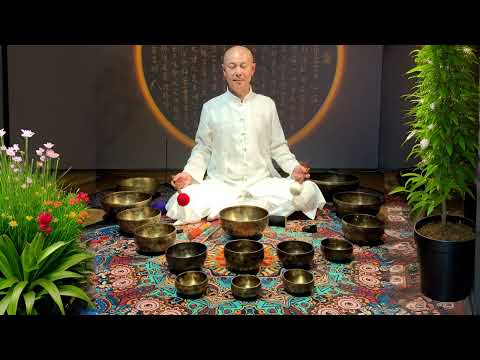
There are various types of sound healing therapies, each with its own unique approach and application. Tibetan singing bowls, for example, are used to create a meditative state and promote relaxation. Gongs are used to create a sense of balance and harmony, while drumming is used to stimulate the body's natural healing processes. The use of tuning forks is also a popular sound healing technique, used to balance the body's energy and promote healing. For more information on sound healing techniques, visit the Sound Healing Institute website.
🎶 Sound Healing and Music Therapy
Sound healing and music therapy are closely related fields, with many sound healing practitioners incorporating music into their practice. The use of music therapy has been shown to have a positive impact on mental health, with many studies demonstrating its effectiveness in reducing symptoms of anxiety and depression. The American Music Therapy Association has also recognized the benefits of music therapy in promoting physical and emotional well-being. For more information on music therapy, visit the Music Therapy Research Institute website.
🙏 Sound Healing and Meditation
Sound healing and meditation are also closely linked, with many sound healing practitioners using meditation techniques to enhance the healing process. The use of guided meditation and mindfulness practices can help individuals to focus their intentions and access deeper states of consciousness. The Mindfulness Research Institute has also conducted studies on the effects of mindfulness on mental health. For more information on meditation and sound healing, visit the Sound Healing and Meditation website.
👫 Sound Healing in Community Settings
Sound healing is not limited to individual practice, but can also be used in community settings to promote social connection and well-being. Sound healing circles, for example, bring people together to share in the experience of sound healing and promote a sense of community. The Sound Healing Community has also established sound healing groups and workshops in various locations. For more information on sound healing in community settings, visit the Sound Healing Network website.
📚 Future Directions in Sound Healing Studies
As the field of sound healing studies continues to evolve, it is likely that new technologies and techniques will emerge. The development of virtual reality sound healing experiences, for example, could provide new opportunities for sound healing practitioners to reach a wider audience. The Sound Healing Technology Institute has also been established to explore the potential of sound healing technology. For more information on the future of sound healing, visit the Sound Healing Future website.
🔍 Controversies and Criticisms in Sound Healing
Despite the growing interest in sound healing, there are also controversies and criticisms surrounding its use. Some critics argue that sound healing is not supported by scientific evidence, and that its benefits are largely anecdotal. The Skeptical Inquirer has also published articles questioning the effectiveness of sound healing. However, many sound healing practitioners argue that the field is still in its early stages, and that more research is needed to fully understand its potential benefits. For more information on the criticisms of sound healing, visit the Sound Healing Criticisms website.
💡 Conclusion and Recommendations
In conclusion, sound healing studies is a rapidly evolving field that holds great promise for promoting physical, emotional, and spiritual well-being. While there are still many questions surrounding its use, the existing research and anecdotal evidence suggest that sound healing can be a powerful tool for healing and transformation. As the field continues to grow and develop, it is likely that new technologies and techniques will emerge, and that sound healing will become an increasingly important part of our healthcare system. For more information on sound healing, visit the Sound Healing Studies website.
Key Facts
- Year
- 2022
- Origin
- Ancient Greece and Eastern Spiritual Traditions
- Category
- Alternative Medicine
- Type
- Field of Study
Frequently Asked Questions
What is sound healing?
Sound healing, also known as sound therapy or sound medicine, is an alternative medicine approach that utilizes sound waves to promote physical, emotional, and spiritual well-being. It involves the use of sound waves to alter the body's physiology, reduce stress and anxiety, and promote relaxation and healing. For more information, visit the Sound Healing Therapy website.
How does sound healing work?
The exact mechanisms of sound healing are not fully understood, but research suggests that sound waves can affect the body's physiology in various ways, including altering brain wave activity, heart rate, and blood pressure. The use of specific sound frequencies and amplitudes can also be tailored to specific healing applications, such as pain management and inflammation reduction. For more information, visit the Sound Healing Research Institute website.
What are the benefits of sound healing?
The benefits of sound healing include reduced stress and anxiety, improved mood, and enhanced physical and emotional well-being. Sound healing has also been shown to reduce symptoms of chronic diseases, such as fibromyalgia and arthritis, and improve sleep quality. For more information, visit the Sound Healing Benefits website.
What types of sound healing therapies are available?
There are various types of sound healing therapies, including Tibetan singing bowls, gongs, drumming, and tuning forks. Each type of therapy has its own unique approach and application, and can be used to promote relaxation, balance, and harmony. For more information, visit the Sound Healing Therapies website.
Can sound healing be used in conjunction with other therapies?
Yes, sound healing can be used in conjunction with other therapies, such as music therapy, meditation, and energy medicine. In fact, many sound healing practitioners incorporate these therapies into their practice to enhance the healing process. For more information, visit the Sound Healing and Music Therapy website.
Is sound healing supported by scientific evidence?
While there is some scientific evidence to support the use of sound healing, the field is still in its early stages, and more research is needed to fully understand its potential benefits. Many sound healing practitioners argue that the field is still evolving, and that more studies are needed to establish its effectiveness. For more information, visit the Sound Healing Research website.
Can sound healing be used to treat specific health conditions?
Yes, sound healing can be used to treat specific health conditions, such as chronic pain, anxiety, and depression. However, it is essential to consult with a qualified sound healing practitioner or healthcare professional before using sound healing as a treatment for any health condition. For more information, visit the Sound Healing and Health website.